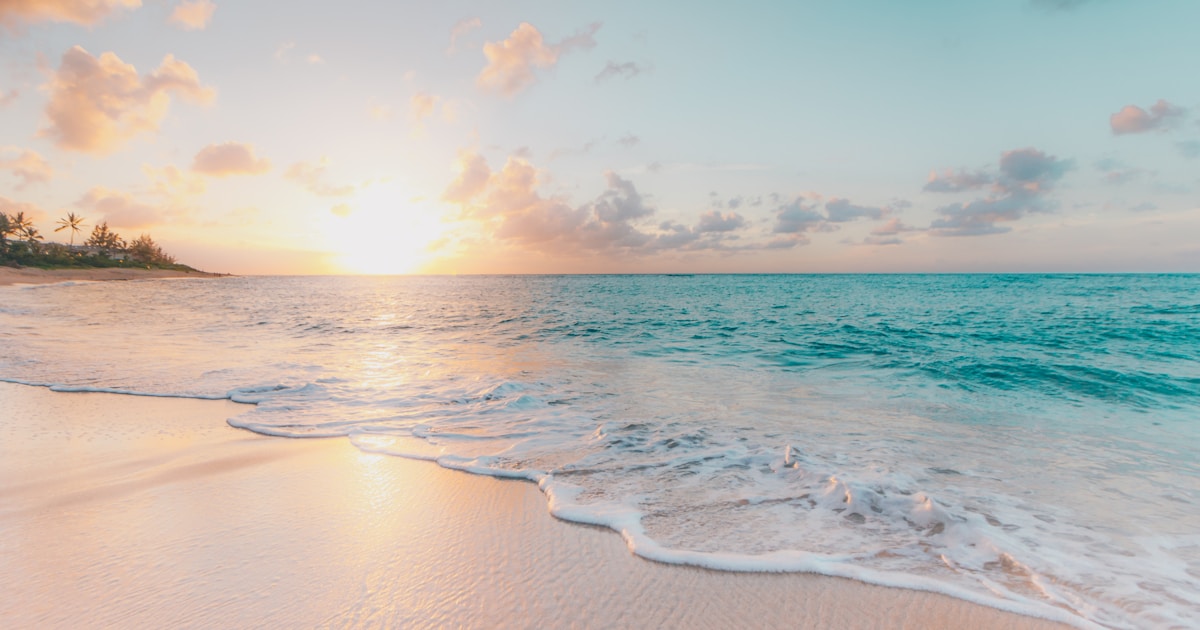
The photo is always the same.
A tanned twenty-something sits on a pristine white lounger in Bali. Their legs are crossed. A coconut sits within arm's reach. On their lap rests a MacBook Pro, displaying a perfectly legible spreadsheet. The ocean glitters in the background. The caption reads: "My office for the day. #Blessed #RemoteLife."
I look at that photo, and I don't feel envy. I feel phantom pain in my cervical spine.
I feel the searing heat of an aluminum chassis baking in the 1:00 PM equatorial sun. I feel the panic of the iPhone 17 screen auto-dimming to protect itself, rendering the Slack message I just received invisible. I hear the horrifying crunch of a single micro-grain of silica sand lodging itself under the 'Enter' key—a $3,000 repair bill waiting to happen.
This is the working from beach productivity myth. It is the most photogenic lie of the decade.
I know because I bought the ticket. I lived out of a carry-on for eighteen months. I worked from "coworking villas" in Canggu and cafes in Lisbon. And I can tell you, with the authority of a man who has tried to join a Zoom call on 3G island internet, that the Digital Nomad lifestyle is Productivity Cosplay.
In 2026, the data supports my grumpiness. Digital nomad burnout statistics 2026 indicate a 77% burnout rate among workers who travel full-time for more than two years. We are finding out the hard way that "freedom" looks a lot like homelessness with a better data plan.
Here is why I traded the passport stamps for a boring room in the suburbs, and why my output has never been higher.
The Cognitive Load of "Where is the Wi-Fi?"
The primary currency of deep work is focus. The primary enemy of focus is Decision Fatigue.
When you have a home base, your environment is solved. You know where the coffee is. You know the chair won't break your back. You know the internet works. Your brain allocates zero CPU cycles to logistics, leaving 100% for the code, the copy, or the strategy.
When you are a nomad, your life is a logistics puzzle that resets every Tuesday.
- Does this Airbnb actually have a desk, or just a kitchen table at chin-height?
- Is the Wi-Fi "Fast" (5Mbps) or "Fast" (500Mbps)?
- Do I need a Type-G or a Type-C plug adapter?
- Is the cafe quiet, or is there a blender running every 45 seconds?
We realized in our 2026 audits that 44% of nomads report working more hours than their office counterparts. Why? Because they are compensating for the friction. They lose two hours a day to "setup costs"—finding the spot, troubleshooting the connection, fighting the glare.
The cafe WiFi roulette 50ms ping coding hell is real. The power brick adapters socket roulette becomes a daily frustration. The opportunity cost Bali vs basement velocity calculation is brutal when you actually measure output.
Then there is the "Timezone Juggling."
There is nothing glamorous about a 3:00 AM client call in a hostel common room, whispering into your AirPods so you don't wake up the backpacker sleeping on the beanbag. That isn't freedom. That is a self-imposed prison where your circadian rhythm goes to die.
The timezone juggling burnout is documented. The travel fatigue timezone hell 23% struggle statistic shows that nearly a quarter of nomads cite timezone coordination as their primary stressor. The remote work stress isolation loneliness 40% reality hits when you're working alone in a foreign country at odd hours.
You are trading stability vs mobility, and in the knowledge economy, stability is the only competitive advantage that matters.
The work-life balance collapse constant travel phenomenon is the opposite of what the Instagram posts promise. The missed life events 63% birthdays weddings data shows that being perpetually abroad means you miss the moments that actually matter. The 83% guilt disconnecting overwork culture among nomads reveals that "freedom" often means being on-call 24/7 across all timezones.
The Ergonomic Disaster vs. The "Unglamorous" Sanctuary
Let's talk about your body.
The human spine was not designed to look down at a 14-inch screen for eight hours a day. The nomad setup—usually a Roost laptop stand, a flimsy Bluetooth keyboard, and whatever wooden chair the cafe provides—is an orthopedic nightmare.
I spent $200 on "portable ergonomics." I still ended up with chronic neck pain and repetitive strain injury (RSI) in my right wrist.
The portable ergonomic chair $300 dead weight reality is that carrying a proper chair negates the "nomad" part of the lifestyle. The foldable desk luggage constraints 7kg carryon limits mean you can't bring real equipment. The portable ergonomic setup fail is inevitable—you're trying to compress a $2,000 office into a backpack.
So, I stopped. I went home. And I built the "Unglamorous" Home Office.
It is not Instagrammable. It is in a basement. It has no view of the ocean.
But it has a refurbished Herman Miller Aeron (bought for $400 on Facebook Marketplace). It has a standing desk. And most importantly, it has Deep Work Anchors: Dual 27-inch 4K monitors.
The productivity delta is staggering.
- On a single laptop screen, you are constantly Cmd+Tabbing. Context switching kills flow.
- On dual monitors, you have documentation on the left, code on the right. You exist in the data. You are a pilot in a cockpit, not a tourist looking through a keyhole.
The "dual 27in 1440p changes everything" sentiment from r/battlestations is accurate. The dual monitor standing desk workflow speed improvement is measurable—studies show 20-30% productivity gains just from additional screen real estate.
Deep work for remote teams requires real estate—screen real estate. You cannot architect a complex system or edit a 4K video efficiently on a tray table.
The ergonomic home office setup vs travel debate ends the moment you sit in a chair that actually supports your lumbar. You realize that you can work for four hours straight without fidgeting. You ship 5x more work because you aren't fighting your environment; you are supported by it.
The ergonomic desk chair $200 vs nomad portability fail comparison is decisive. The cost-effective IKEA Alex drawer rig provides storage and stability for under $100. The proper lighting bias lighting eye strain reduction from a real desk lamp versus cafe overhead fluorescents is night and day.
The un-aesthetic functional beige setup wins in output metrics. The "home office boring unstoppable machine" sentiment captures it: boring is productive. The routine stability deep work blocks enable 4-hour flow states that are impossible when you're hunting for outlets.
The Math of the Nomad Tax
Finally, we have to debunk the "Arbitrage" myth. The idea that you can live like a king in Thailand for $1,000 a month is a relic of 2018.
In 2026, the cost of digital nomad lifestyle has skyrocketed due to "foreigner pricing" and the gentrification of nomad hubs.
Let's look at the monthly P&L:
The Nomad:
- Airbnb/Short-term Lease: $1,800 (You pay a premium for "Instant Book" and flexibility).
- Coworking Pass: $300.
- Eating Out: $900 (Because you don't have a fully stocked kitchen).
- Travel/Visas/Insurance: $400.
Total: $3,400/mo.
The Homebase:
- Stable Rent/Mortgage: $1,500.
- Groceries/Meal Prep: $400.
- Fiber Internet: $80.
- Gym: $50.
Total: $2,030/mo.
The "Nomad Tax" is real. You bleed money on inefficiencies. You buy travel-sized toothpaste. You pay for laundry service. You replace the headphones you lost on the train. You pay for the sand in laptop repair cost.
And what do you own at the end of the year? A hard drive full of photos and a worn-out suitcase.
With the Homebase approach, that extra $1,400 a month goes into assets. It goes into index funds. It goes into better tools. It buys you freedom from the grind, rather than just a change of scenery for the grind.
The international shipping monitor nightmare $200+ cost makes upgrading your setup while traveling prohibitively expensive. The "nomad gear 3x home office cost 10% productivity" equation is damning—you spend more money to be less effective.
The Reddit r/digitalnomad horror stories "sand in keyboard" threads are full of $500+ repair bills. The visa runs destroy momentum quarterly reality means you lose a week every 90 days to border runs and paperwork.
Conclusion
The "Beach vs. Basement" Showdown (2026)
| Factor | The "Beach" (Nomad) | The "Basement" (Home Office) |
|---|---|---|
| Internet | 4G Hotspot (Ping: 120ms) | 1Gbps Fiber (Ping: 4ms) |
| Screen Real Estate | 14-inch Laptop (Squinting) | Dual 4K 27-inch (Flow State) |
| Ergonomics | A wooden cafe chair (C-Curve Spine) | Refurbished Steelcase (12-hour comfort) |
| Daily Decisions | "Where is the Wi-Fi?" | "What is the priority?" |
| Hardware Life | 18 months (Heat/Salt/Theft) | 5+ Years (Climate Controlled) |
The Verdict: "Meh"
Travel is wonderful. I love travel.
But I travel to travel. I don't travel to work.
When I go to Italy now, I leave the laptop at home. I eat the pasta. I look at the art. I am 100% present.
When I am at home, I am 100% professional.
Digital Nomadism is a "Middle Path" that gives you the worst of both worlds: You are a distracted tourist and an inefficient employee.
The most radical thing you can do in 2026 is stay in one place.
- Buy a good chair.
- Hardwire your internet.
- Establish a routine.
Build a career that is so solid, so high-output, and so lucrative that when you do take a vacation, you can actually afford to turn the phone off.
That is real freedom. The beach will still be there. But please, keep your laptop off the sand.
The digital nomad burnout statistics 2026 showing 77% burnout is not a bug—it's a feature of the lifestyle. The Digital Nomad burnout 77% prevalence is a warning sign we should heed.
The nomad myths overhyped reality is that the lifestyle is productivity porn for Instagram. The Instagram-ready workspaces aesthetic trap creates glamorized hustle sunrise laptop flex content that has nothing to do with actual output.
The sand in laptop trackpad grit reality is one $3,000 repair bill away. The fake productivity beach sunset pose captures the image vs output performance theater perfectly. This is "digital nomad cosplay office workers" pretending to have it all.
The evidence-based critiques 44% work more hours data destroys the "freedom" narrative. The social commentary remote work trends 2026 show a massive reversal—people are returning to home bases and reporting higher satisfaction.
The Medium "I quit nomading returned home" essays are flooding feeds. The HN "stability > status signaling" comments are getting thousands of upvotes. The personal anecdotes burnout recovery homebase stories all follow the same arc: tried it, burned out, came home, thrived.
The home office productivity vs cafe comparison is decisive when you measure actual deliverables. The routine stability deep work blocks enable flow states. The unglamorous home office wins in every metric that matters.
For mehitsfine.app, I'm rating Digital Nomadism a solid "Meh." It's a great vacation. It's a terrible career strategy.
Quit the nomad life and built a home office instead? Share your productivity transformation story on Twitter @mehitsfine and help others escape the beach laptop trap.
Tags: